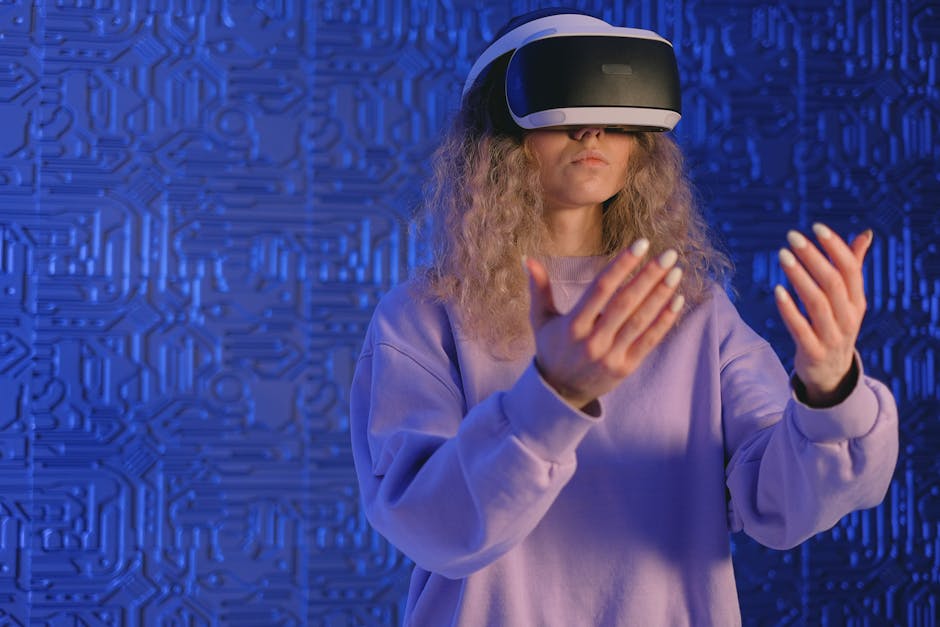
{
“title”: “Why Virtual Reality is the Next Frontier for High-Performance Leaders”,
“meta_description”: “Virtual reality is moving beyond gaming into high-stakes enterprise. Discover how spatial computing enhances decision-making and operational strategy today.”,
“tags”: [“Virtual Reality”, “Spatial Computing”, “Strategic Leadership”, “Enterprise Technology”, “Operational Efficiency”],
“categories”: [“Technology”, “Business”],
“body”: “
Beyond the Consumer Hype
Most corporate observers dismiss virtual reality as a peripheral entertainment medium. This is a strategic blind spot. At its core, virtual reality represents the transition from two-dimensional data consumption to three-dimensional spatial understanding. For leaders, this isn’t about novelty; it is about cognitive throughput. The ability to visualize complex systems and data environments in a 1:1 scale fundamentally changes how teams iterate on design and simulate outcomes.
Accelerating Decision Latency
High-performance organizations thrive on low-latency decision-making. Traditional interfaces—monitors, dashboards, and spreadsheets—force the brain to translate flattened data back into conceptual models. Virtual reality removes this translation step. By operating within an immersive environment, stakeholders can walk through a digital twin of a supply chain or a product prototype. This capacity for immediate spatial awareness is a form of decision-making acceleration that provides a distinct competitive advantage.
Simulating Failure to Ensure Success
Operational excellence relies on the rigor of your stress tests. VR enables the simulation of high-stakes scenarios—be it an architectural failure, a catastrophic factory floor bottleneck, or a crisis response drill—without incurring the physical cost of trial and error. This is not merely training; it is performance conditioning. By placing teams in hyper-realistic, high-pressure environments, leaders can observe cognitive reactions and workflow inefficiencies that are impossible to capture through standard KPIs.
Integrating Spatial Computing into Strategy
Adopting VR requires moving past the hardware phase and focusing on data interoperability. If your organization relies on siloed information, spatial computing will only magnify the existing operations friction. A successful rollout starts with a cohesive data strategy that allows real-time telemetry to feed into a visual environment. When your digital assets are synchronized with your live operations, the virtual model becomes the ultimate source of truth for the entire company.
The Executive Mandate
Leaders should treat spatial literacy as a core requirement for their technical teams. As AI begins to generate increasingly complex architectural and organizational designs, the ability to ‘read’ these outputs in three dimensions will separate the operators from the spectators. Integrating these tools is less about buying headsets and more about fostering a culture that prioritizes spatial cognition as a primary asset.
For more insights on how these tools fit into a modern framework, visit thebossmind.net for specialized perspectives on enterprise agility.
Further Reading
”
}






Leave a Reply